
Most people never think about what their computer is doing behind the scenes.
You open a browser, launch an application, start a game, or run a piece of software, and everything simply works. At least that’s the goal.
Then one day you notice something strange.
Maybe it’s in an error message.
Maybe it appears in a developer tool.
Perhaps it’s listed in a log file.
You see something like 127.0.0.1:62893 and immediately wonder what it means.
At first glance, it looks technical enough to be intimidating. Numbers separated by dots and a colon don’t exactly scream “easy to understand.”
The good news is that it’s actually much simpler than it appears.
Once you understand the basics, you’ll start seeing addresses like this everywhere.
The Meaning Behind 127.0.0.1
Let’s start with the first part.
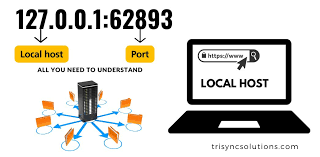
127.0.0.1 is known as localhost.
Think of localhost as your computer talking to itself.
That might sound odd at first, but computers do this constantly.
Imagine you’re writing notes to yourself rather than sending them to someone else. The information never leaves your desk. It stays local.
That’s essentially what localhost does.
Instead of connecting to another computer somewhere across the internet, your device creates a connection to itself.
The request leaves one program and immediately returns to the same machine.
No external network required.
No internet connection necessary.
Everything happens internally.
It’s one of the most important concepts in modern computing.
Why Computers Talk to Themselves
Here’s the thing.
Modern software rarely operates as a single giant program anymore.
Applications often consist of multiple components working together.
A web browser may communicate with a local service.
A development tool may connect to a local database.
A desktop application may run a small server behind the scenes.
These components need a way to exchange information.
Localhost provides that communication channel.
For example, a developer testing a website might run the site on their own machine before publishing it online.
Instead of using a public address, the site becomes available through localhost.
Everything stays private.
Everything stays local.
That’s incredibly useful.
Understanding the Port Number
Now let’s look at the second part.
62893 is a port number.
Think of your computer as a large office building.
The IP address identifies the building itself.
The port identifies a specific office inside that building.
Without ports, computers wouldn’t know which application should receive incoming information.
One program may be listening on one port.
Another program may use a completely different port.
Thousands of ports can exist simultaneously.
That’s how multiple applications communicate without interfering with one another.
When you see 127.0.0.1:62893, you’re essentially looking at a specific local address combined with a specific communication channel.
Why Port 62893 Looks Random
Many people notice something immediately.
Why 62893?
Why not 80 or 443?
Why such a large number?
The answer is surprisingly straightforward.
Many applications generate temporary ports automatically.
Instead of using a fixed number every time, the operating system selects an available port from a large range.
This helps avoid conflicts.
Imagine two applications trying to occupy the same parking space.
Problems would occur quickly.
Randomized port assignments reduce those issues.
One day an application might use 62893.
The next day it might use 63122.
Later it could use something entirely different.
That’s normal.
Common Situations Where You’ll See 127.0.0.1:62893
You don’t need to be a programmer to encounter localhost addresses.
They appear in more places than many people realize.
Web development tools frequently use localhost.
Database software often relies on localhost connections.
Browser extensions sometimes communicate through localhost.
Gaming launchers occasionally create localhost services.
Security applications may use local ports as well.
Picture someone installing a new productivity tool.
During setup, the application launches a background service and opens a temporary localhost connection.
Everything works automatically.
The user never notices.
Until they stumble across a log file and see something like 127.0.0.1:62893.
Suddenly curiosity kicks in.
Is 127.0.0.1:62893 Dangerous?
This is probably the most common question.
Let’s be honest.
Random technical messages can look suspicious.
Especially when unfamiliar numbers appear.
In most situations, localhost addresses are completely normal.
The address itself isn’t dangerous.
It’s simply a mechanism for internal communication.
The important question isn’t whether localhost exists.
It’s which application is using it.
If trusted software created the connection, there’s usually no cause for concern.
If an unknown or suspicious program is involved, further investigation may be worthwhile.
The address itself, however, is not inherently harmful.
Localhost Makes Development Easier
Developers rely heavily on localhost environments.
Without them, testing software would become significantly more complicated.
Imagine building a website.
You make a small change.
Then you need to upload everything to a live server just to see the result.
That process would quickly become frustrating.
Instead, developers test locally first.
Changes happen instantly.
Mistakes stay private.
Experiments remain safe.
Only when everything works correctly does the project move online.
Localhost makes that workflow possible.
Why Error Messages Sometimes Mention It
Not every localhost appearance signals success.
Sometimes error messages include addresses like 127.0.0.1:62893.
This can happen for several reasons.
A service may have stopped unexpectedly.
A port may no longer be available.
An application might be attempting to connect before another component has started.
Network configurations occasionally create conflicts as well.
The presence of localhost in an error message doesn’t necessarily indicate a serious issue.
Often it simply points to a communication problem between programs running on the same machine.
The Loopback Concept
There’s an interesting technical idea behind localhost.
It’s called the loopback interface.
The name sounds complicated.
The concept isn’t.
Information sent to 127.0.0.1 loops back to the same computer.
No external destination exists.
The data leaves and returns almost instantly.
Think about speaking into a recorder and immediately playing the message back to yourself.
The conversation never involves anyone else.
That’s similar to how loopback communication works.
It’s self-contained.
Fast.
Reliable.
And extremely useful.
Everyday Users Benefit Too
Many people assume localhost only matters to programmers.
Not true.
Regular computer users benefit from it constantly.
Video conferencing software may use local services.
Creative applications sometimes rely on localhost communication.
Security tools often operate through local ports.
Cloud synchronization services occasionally use localhost as well.
Most users simply don’t realize it’s happening.
And honestly, that’s a good thing.
Technology often works best when it stays invisible.
When You Should Investigate Further
Although localhost activity is usually harmless, there are situations worth examining.
Unexpected network behavior.
Unknown applications.
Unusual system performance.
Repeated error messages.
Security warnings.
In those cases, identifying which program owns a specific port can provide useful information.
Most operating systems include tools that reveal active network connections.
Advanced users and IT professionals often use these utilities to troubleshoot problems.
The goal isn’t to panic whenever localhost appears.
The goal is understanding what you’re seeing.
Knowledge removes uncertainty.
Why Localhost Remains Essential
Computing has changed dramatically over the years.
Hardware became faster.
Networks became more powerful.
Applications became increasingly sophisticated.
Yet localhost remains as important as ever.
Modern software ecosystems depend on internal communication.
Programs exchange information continuously.
Services interact behind the scenes.
Processes coordinate activities throughout the operating system.
Localhost serves as the foundation for much of that communication.
Without it, countless applications would function very differently.
The Bigger Picture
At first glance, 127.0.0.1:62893 appears mysterious.
A random string of numbers.
Something technical.
Something potentially confusing.
But once you break it down, the meaning becomes clear.
The first part identifies your own computer.
The second part identifies a temporary communication channel.
Together, they allow software components to exchange information efficiently and securely on the same machine.
That’s all it is.
No mystery.
No hidden agenda.
Just one of the many mechanisms that help modern computers operate smoothly.
Final Thoughts
Seeing 127.0.0.1:62893 for the first time can feel intimidating, especially if you’re unfamiliar with networking concepts. Fortunately, the explanation is much simpler than the numbers suggest.
It’s essentially your computer talking to itself through a specific port assigned for a particular task. Developers use it. Applications rely on it. Operating systems depend on it every day.
The next time you encounter a localhost address, you’ll know exactly what you’re looking at.
And that’s often the difference between technology feeling complicated and technology feeling understandable.
Sometimes all it takes is a little context.