
Dubai doesn’t really do “subtle.”
That becomes obvious almost immediately.
The skyline looks futuristic before your plane even lands. Roads feel impossibly polished. Hotels resemble giant architectural experiments. And somehow, in the middle of desert heat, you’ll still find indoor ski slopes, rooftop infinity pools, and restaurants serving gold-covered desserts to tourists taking photos from every angle imaginable.
Now, let’s be honest. It would be easy to dismiss Dubai as all flash and excess.
A lot of first-time visitors expect exactly that.
But here’s the interesting part: once you spend real time there, the city starts feeling more layered than its social media reputation suggests. Beneath the luxury branding, Dubai operates with a strange kind of confidence. It knows exactly what experience it wants to create.
And people keep returning because that experience feels smooth in ways many destinations struggle to match.
Luxury in Dubai feels effortless
Some luxury destinations feel formal and intimidating.
Dubai usually doesn’t.
That’s one reason travelers connect with it so quickly. You can walk into an ultra-high-end hotel lobby wearing relaxed resort clothes and still feel comfortable. Staff members treat luxury as normal daily atmosphere rather than rare exclusivity.
That changes the mood entirely.
For example, imagine arriving after a long overnight flight. You’re exhausted, slightly disoriented, and wondering if the trip was worth the expense. Then someone hands you a cold towel, takes your luggage instantly, offers Arabic coffee, and suddenly the stress level drops dramatically.
Dubai understands hospitality psychology very well.
The city designs experiences around convenience, comfort, and visual impact constantly.
The hotels almost become destinations themselves
A lot of cities have luxury hotels.
Dubai builds entire experiences around them.
Some travelers barely leave their resorts because the properties already include private beaches, celebrity-chef restaurants, spas, rooftop lounges, shopping areas, pools overlooking the skyline, and enough entertainment to fill several days comfortably.
And honestly, that’s not necessarily a bad thing.
Modern travel isn’t always about exhausting sightseeing schedules anymore. Many people want relaxation without sacrificing quality or atmosphere. Dubai caters to that mindset extremely well.
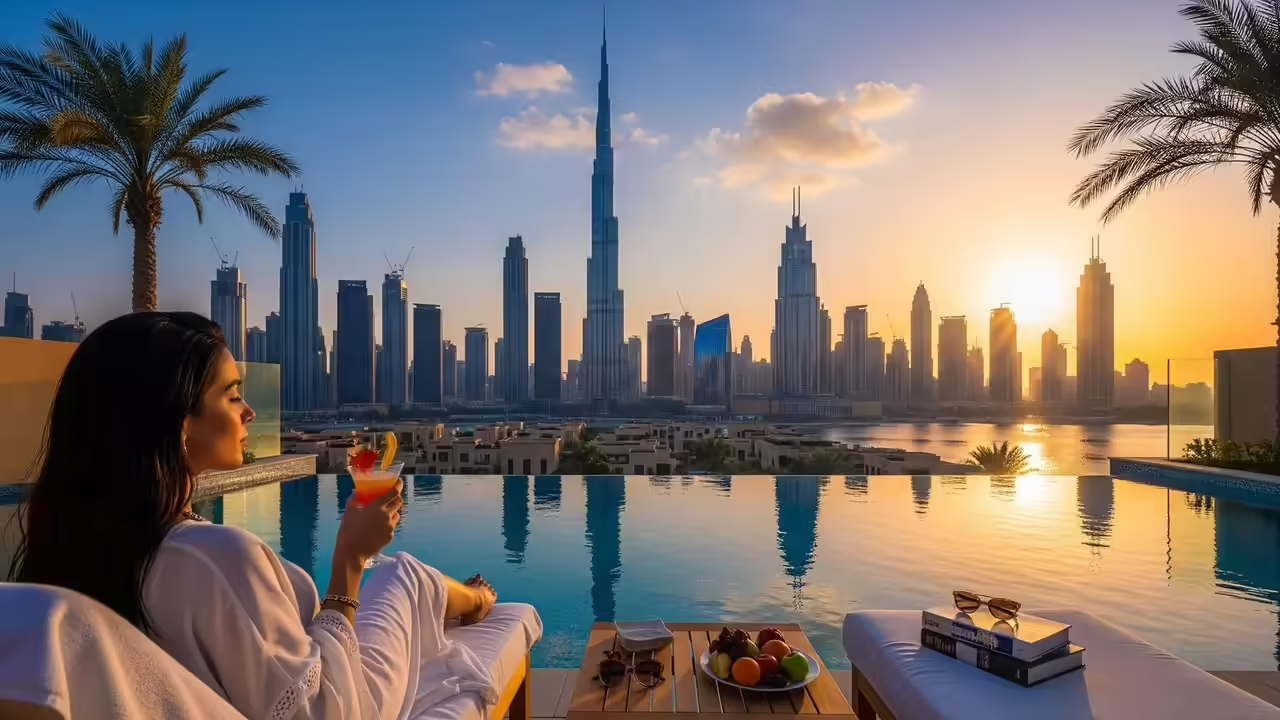
You can spend an afternoon floating in a shaded pool with the city skyline glowing in the background and genuinely feel like you’ve stepped slightly outside ordinary life.
That escape factor matters more than people admit.
Desert experiences change people’s expectations
One thing surprises many visitors.
The desert ends up becoming more memorable than the skyscrapers.
At first, tourists focus heavily on luxury malls and futuristic architecture because those images dominate online travel content. But then they book a desert evening almost casually and suddenly discover a completely different side of Dubai.
Quiet.
Open space.
Stillness.
The city noise disappears quickly once you drive far enough into the dunes.
Imagine sitting outside after sunset while the temperature cools slightly, soft lights glow around a desert camp, and silence stretches across the sand in every direction. It feels strangely calming after spending time inside ultra-modern urban environments.
That contrast gives Dubai much more emotional depth than outsiders expect.
Shopping became part of the identity
Dubai treats shopping almost like entertainment architecture.
Even people who normally dislike shopping end up wandering malls longer than intended because the environments feel so exaggerated and immersive. Aquariums inside malls. Luxury brands beside indoor waterfalls. Massive food halls. Designer stores mixed with casual cafés.
The experience feels curated rather than purely commercial.
Now, let’s be honest. You don’t need to spend huge amounts of money to enjoy that atmosphere either. Some visitors simply enjoy observing the scale and energy around them.
And honestly, Dubai understands visual spectacle better than almost any city in the world.
Food reflects the city’s personality
One of Dubai’s strongest advantages is variety.
The city pulls people from everywhere, so the food scene becomes incredibly diverse naturally. You can eat luxury Japanese omakase one night, Lebanese street food the next, then sit in a tiny café serving exceptional Indian tea the following afternoon.
That mix gives Dubai more personality than people initially expect.
Because underneath the polished luxury image, the city functions through cultural overlap constantly. Different languages, cuisines, styles, and traditions collide daily.
And honestly, some of the best meals in Dubai aren’t always the most expensive ones.
Sometimes the memorable experience is sitting outside late at night eating grilled meat and fresh bread while the city buzzes quietly around you.
Service culture feels unusually polished
People notice service quality in Dubai almost immediately.
Hotels, restaurants, drivers, spas, lounges—many hospitality workers operate with remarkable attention to detail because the city’s tourism identity depends heavily on consistency.
Small things stand out.
Cold water arriving automatically.
Bags handled without awkwardness.
Staff remembering preferences.
Transportation appearing exactly on time.
These details sound minor individually, but together they create a feeling of ease travelers remember long afterward.
And honestly, luxury often comes down to reducing friction more than showing off wealth.
Dubai understands that balance surprisingly well.
The weather changes the rhythm completely
Dubai weather shapes daily life dramatically.
During hotter months especially, people move differently. Outdoor activity slows during afternoons while evenings become lively again after temperatures drop slightly.
That rhythm creates a unique vacation atmosphere.
Late-night dinners feel normal.
Midnight walks near the marina still feel active.
Rooftop lounges stay busy long after many cities quiet down.
Imagine leaving a beautifully air-conditioned restaurant at 11 p.m. and finding the city still glowing with energy everywhere around you. That nighttime atmosphere becomes part of Dubai’s luxury identity too.
The city feels awake constantly.
Privacy matters to luxury travelers
One underrated reason wealthy travelers like Dubai is privacy.
People can enjoy luxury experiences without attracting constant attention compared to certain European or American celebrity-heavy destinations. High-end travelers often prefer environments where service stays discreet and personal space feels respected.
Dubai built much of its hospitality culture around that idea.
Private villas.
Exclusive beach clubs.
Personal drivers.
Quiet luxury lounges.
Experiences tailored around comfort rather than public visibility.
And honestly, many affluent travelers value privacy more than flashy attention anyway.
The city keeps reinventing itself
Dubai rarely stays still.
That’s part of its appeal.
Every few years there’s another architectural project, entertainment concept, luxury resort, or dining experience reshaping parts of the city again. Visitors returning after several years often find entire new districts developed where almost nothing existed previously.
That constant reinvention creates excitement because the destination never feels fully finished.
There’s always something new opening.
Some people find that energy thrilling. Others find it overwhelming. But it definitely keeps Dubai culturally relevant in global tourism conversations.
Luxury travel changed emotionally
Years ago, luxury holidays often focused heavily on status.
Now they focus more on comfort, convenience, personalization, and emotional experience.
Dubai adapted to that shift effectively.
Modern travelers increasingly want experiences that feel smooth and memorable rather than simply expensive. A beautiful quiet breakfast overlooking the water often matters more than obvious displays of wealth.
A stress-free experience matters more than rigid formality.
Dubai’s luxury culture increasingly reflects that softer approach.
The city feels built for escapism
Here’s the thing.
Dubai almost feels intentionally designed to remove daily inconvenience temporarily.
Clean roads.
Efficient hotels.
Controlled environments.
Polished public spaces.
Reliable transportation.
Climate-controlled interiors everywhere.
For travelers coming from stressful routines or crowded urban environments, that smoothness feels deeply relaxing. The city creates a kind of polished fantasy version of modern life where logistics rarely become frustrating.
And honestly, people pay for that emotional relief as much as the luxury itself.
Final thoughts on Dubai luxury holidays
Dubai luxury holidays continue attracting travelers because the city delivers something many destinations struggle to balance successfully: spectacle combined with comfort.
Yes, Dubai looks dramatic.
The skyline, hotels, shopping, restaurants, and resorts all aim to impress visually. But beneath that visual intensity is a carefully designed hospitality culture focused heavily on ease, service, privacy, and experience quality.
And honestly, that combination works.
Whether someone spends evenings in rooftop lounges overlooking the marina, escapes into the desert for quiet contrast, relaxes inside luxury resorts, or simply enjoys the city’s nonstop energy, Dubai leaves a strong impression because it commits fully to its identity.
It doesn’t try to feel understated.
It tries to feel unforgettable.