
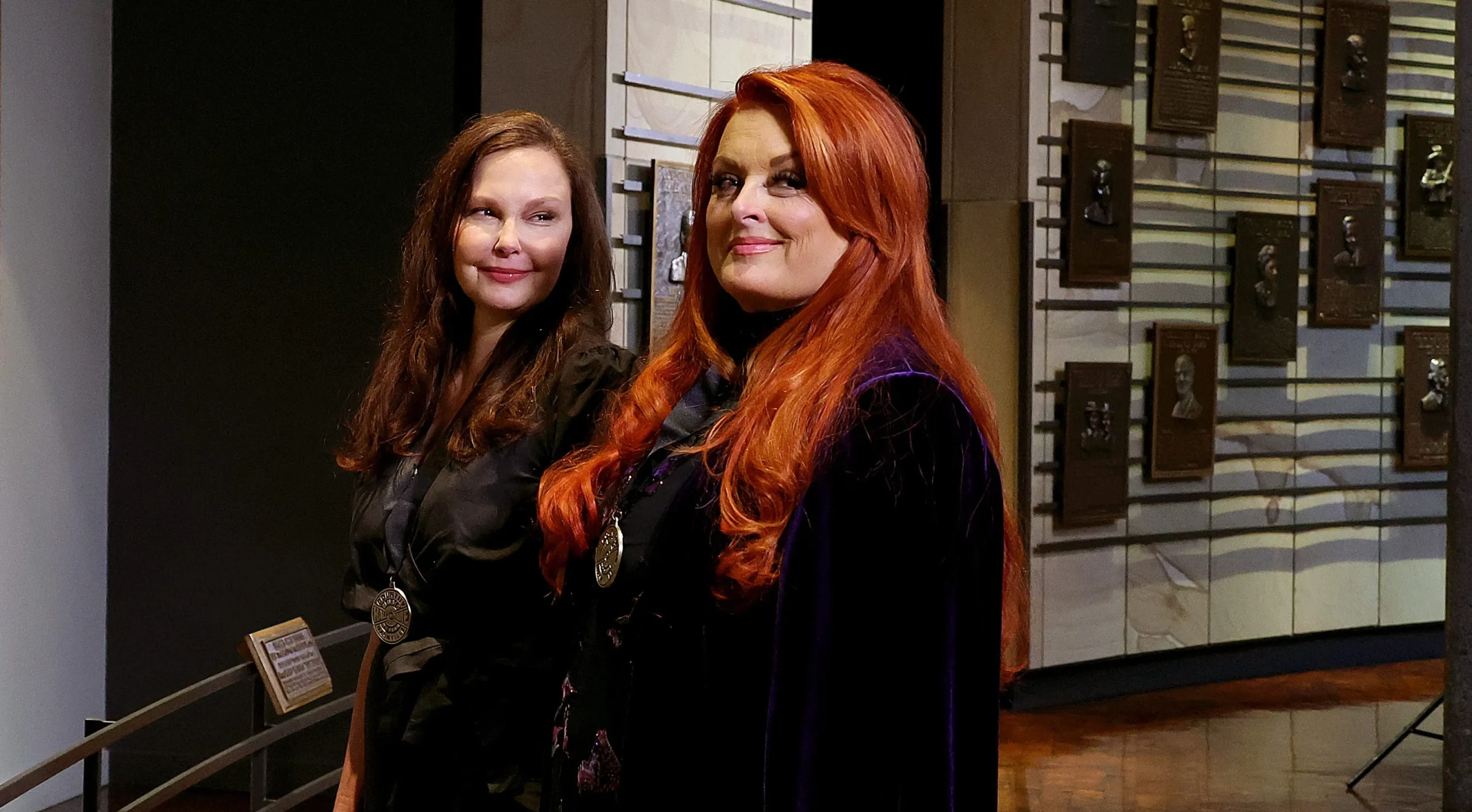
There is something that happens the moment Wynonna Judd walks onto a stage. The crowd does not just applaud — they exhale. Like they have been holding their breath, waiting. And when she opens her mouth to sing, that exhale turns into tears, goosebumps, standing ovations, and something harder to name. Something closer to relief.
That is the only way to describe what has been happening at her concerts over the past few years. Wynonna Judd performance reactions have become a cultural conversation all on their own — not just concert reviews or social media posts, but something more layered. Something more human. Fans are not simply rating a show. They are processing grief, celebrating survival, and watching an artist who refuses to pretend that everything is fine when it is not.
This article breaks down exactly why her performances generate the kind of responses they do. From the darkest moment in her public life to the sold-out tour dates of 2025 and 2026, there is a story here that goes well beyond music. And it is one worth understanding fully.
The Moment That Changed Everything — Naomi’s Loss and What It Did to Every Performance After
To understand why audiences react to Wynonna the way they do today, you have to go back to April 2022. The Judds — Wynonna and her mother Naomi — were finally being inducted into the Country Music Hall of Fame. It was supposed to be the crowning celebration of a legendary career. A victory lap. A moment of pure joy after years of hard work, personal struggles, and musical triumphs.
Then, just one day before the ceremony, Naomi Judd died by suicide.
The country music world was shattered. And Wynonna, who had lost not just her mother but also her musical partner and the person who had been at the center of her entire career, had to decide what to do. She showed up to that induction ceremony anyway. She delivered a speech with visible devastation written across her face. Fans watching described it as one of the bravest things they had ever witnessed from any artist, anywhere.
That single moment set the emotional tone for everything that followed. Every performance Wynonna has given since then carries the weight of that day. Audiences know it. They feel it. And it changes the way they receive her the moment she steps into the spotlight.
A Tour Built for Two, Walked Alone
The original plan had been a final farewell tour with Naomi — a celebration for a mother-daughter duo that had changed the course of country music. When Naomi passed, most people assumed the tour would be canceled. No one would have blamed Wynonna for retreating from the public eye entirely.
Instead, she made a remarkable choice. She went ahead with the tour on her own.
She invited friends — Martina McBride, Trisha Yearwood, Faith Hill, Kelsea Ballerini — to join her on different dates. But the show was hers. Every night, she stood on a stage that was meant for two and filled it by herself. That decision alone is why the early fan reactions were so emotionally charged. People were not just watching a concert. They were watching someone choose to live out loud in the middle of grief, and that is something most of us never get to see.
The 2023 CMA Awards — When Wynonna Judd Performance Fans Reactions Turned Into a National Conversation
If you were watching the 2023 CMA Awards, you remember the moment. Wynonna joined Jelly Roll to perform his song “Need a Favor.” The stage was set with low lights and a full choir. The emotion in the room was thick before a single note was sung.
As they performed, Wynonna kept her hand on Jelly Roll’s arm throughout the entire song. She never let go. Viewers watching at home noticed that something about her seemed different. She appeared visibly nervous. Her stance was unsteady. Her emotional state seemed to extend beyond normal performance nerves into something deeper and harder to define.
Social media divided almost immediately. On one side were fans expressing genuine concern about her health and well-being. On the other side were supporters who pushed back hard, pointing out that she had just lost her mother and had every right to be emotional. Both groups were reacting from a place of care. That is what made the moment so significant.
What Wynonna Said — and Why It Mattered
After the performance, Wynonna addressed what viewers had seen. She explained that she had been nervous and emotional, thinking about her late mother throughout the song. She did not deflect or minimize it. She was honest.
That transparency changed the conversation completely. Fans who had been worried shifted to understanding. Supporters who had been defensive relaxed. And everyone came out of that moment feeling closer to her — not because she had performed flawlessly, but because she had been real.
This is one of the defining qualities of Wynonna Judd performance reactions in general. Audiences are not responding to a polished product. They are responding to a human being who refuses to hide what she is feeling, even when it is messy and uncomfortable and not what a publicist would approve.
The Back to Wy Tour — A Turning Point in How Fans Responded
The Back to Wy Tour changed things. It started in late 2023, extended through 2024, and continued into 2025 and beyond. The concept was straightforward but deeply personal: Wynonna would perform her first two solo albums — Wynonna (1992) and Tell Me Why (1993) — track by track, start to finish. These were the albums she made right after The Judds had to step back due to Naomi’s hepatitis C diagnosis. Albums she made alone for the first time.
The parallel to her current situation was impossible to miss. And audiences felt it.
Each night also included an intimate acoustic set featuring hits from her Judds years — stripped down, no frills, just her voice and the songs. Fans described the experience less like a concert and more like sitting in someone’s living room while they told you the story of their life.
What Fans Said Night After Night
The reactions that came out of Back to Wy Tour shows were remarkably consistent across cities and venues. Words like “queen,” “legend,” and “GOAT” appeared constantly in fan posts and reviews. But the comments that stood out most were the ones that went beyond praise for her talent. People were describing something they had experienced personally.
“It felt like a church service, not a concert.”
“I have never cried so much at a show in my life.”
“She is not just singing — she is surviving in front of us.”
Those three lines capture something true. The people in those seats were not passive audience members. They were participants in a shared emotional experience. Some had driven hours to be there. Some had been Judds fans since the 1980s and were now bringing their adult children to see Wynonna for the first time. Some were going through their own grief and found that her music gave them permission to feel it fully.
The Song That Broke Every Room
One performance in particular became a signature moment across the tour. When Wynonna sang “Love Can Build a Bridge” — one of The Judds’ most beloved songs — audiences were not prepared for what they witnessed. Her voice would crack. Tears would fall. And still, she kept going. She did not stop. She did not turn away from the audience or signal that she needed a moment. She sang through it.
That is not a polished, rehearsed emotional beat. That is real. And fans responded to it exactly as you would expect. Standing ovations that lasted minutes. Audience members in tears themselves. The kind of collective grief-turned-gratitude that is almost impossible to manufacture and completely impossible to fake.
What Her Stage Presence Actually Does to an Audience
Here is something critics and fans both mention consistently when talking about Wynonna live: she almost never moves around the stage. No choreography. No runway walks. No elaborate production elements designed to distract from the music. She stands in place and she sings.
In today’s concert environment, where spectacle has become the default — dancers, pyrotechnics, giant screens, elaborate sets — Wynonna’s stillness is almost jarring at first. But then something happens. Your eyes stop looking for movement and start listening. You have no choice.
Her stillness is not a limitation. It is a choice. It draws attention exactly where she wants it — to her voice, to the lyrics, to the story inside the song. Critics have compared this approach to gospel traditions, where the power comes from soul rather than spectacle. And that comparison holds up. In large venues, her stillness creates an intimacy that feels almost impossible at that scale.
The Voice That Refuses to Age the Way You Would Expect
One of the most consistent themes in recent reviews is the state of Wynonna’s voice. People who have followed her career for decades come to shows with a specific expectation, often braced for the natural changes that come with time. What they find instead tends to catch them off guard.
Her voice has changed. But critics argue it has not diminished — it has deepened. The piercing high notes of her early 1990s recordings have given way to a lower register that carries more texture, more grit, and more emotional weight. Reviewers consistently describe her “growl” as more powerful than ever. The technical mastery is still there. But now it is paired with something that only comes from living through real loss — a quality that no amount of studio production can replicate.
When she performed “All Downhill From Ashland” at an Austin City Limits taping — a newer song rooted in her Kentucky background — critics who were in the room called it a masterclass in storytelling. She was not just singing notes. She was singing memories. That distinction matters enormously, and audiences feel it even when they cannot quite articulate why.
Making the Audience Feel Seen
Another detail that shows up constantly in accounts from fans is how personally acknowledged they feel at her shows. Wynonna talks between songs. Not scripted patter — actual conversation. She shares stories. She asks questions. She responds to what she hears from the crowd. People leave feeling like they were part of a dialogue rather than a performance.
Unscripted moments become the highlights that fans talk about for years. A young girl pulled up onto the stage to sing “Mama He’s Crazy” with her idol — her mother called it a core memory that would last a lifetime. Surprise guest appearances. Stories told mid-show that veer into unexpected emotional territory. These moments cannot be scheduled or repeated. They exist once and then only in the memory of the people who were there.
When Wynonna Judd Performance Reactions Got Complicated — The Tyler Childers Moment
Not every reaction to Wynonna’s performances has been straightforwardly emotional or positive. Some have been confused. One moment in particular generated a debate that said as much about fan loyalty as it did about the music industry.
In April 2025, Wynonna opened for Tyler Childers at a sold-out stadium show in Lexington, Kentucky — her home state, a venue packed with tens of thousands of people. She was the opening act. Social media reacted almost instantly.
“Opening act????”
“He should be opening for her.”
“I do not ever see Wynonna as an opening act.”
The sentiment was clear and it came from genuine feeling. This is a five-time Grammy winner with more than twenty number-one singles and a four-decade career. The idea of her in a supporting role felt wrong to many fans. And their reaction was not about disrespecting Tyler Childers. It was about defending someone they love.
What many of those fans may have missed is what Wynonna herself seemed to understand: opening for an artist with Tyler Childers’ current audience reach meant introducing herself to a massive group of younger country fans who had grown up without The Judds as part of their musical vocabulary. That is not a demotion. That is strategy. That is an artist thinking about the next chapter, not just the last one.
Wynonna herself posted about it on Instagram with unmistakable pride: “Singing ‘your Kentucky girl’s been waiting patiently’ to a sold out stadium crowd in my home state.” She was not wounded by the billing. She was grateful for the room.
How Social Media Has Extended the Reach of Every Performance
One of the most interesting dimensions of Wynonna Judd performance reactions in the current era is how far they travel beyond the concert venue. A moment that happens in front of ten thousand people in one city can reach millions within hours.
Reaction videos on YouTube — where people film themselves watching Wynonna perform for the first time — have introduced her to entire new generations of listeners. People who have never heard of The Judds, who did not grow up with country music, sit down to watch a clip someone shared and end up in tears by the end. They leave comments saying they do not know who this woman is but they have never felt something so immediately in a performance. Then they go find the albums.
TikTok clips from her shows function similarly. A forty-second moment of her singing through tears at a Back to Wy Tour date gets shared hundreds of thousands of times, and each share brings new people into the conversation. What started as a reaction from the audience inside a concert hall becomes a reaction from people all over the world who were not there.
This digital amplification has made sustained search interest in Wynonna’s performances a real and growing phenomenon. The interest does not come from one viral moment. It builds across multiple performances, each one adding another layer — a praised national anthem, a moving CMA Fest appearance, a debated billing situation, a fan story that circulates because it is too moving to keep private.
The Evolution of Audience Response — From Grief to Gratitude to Legacy
If you trace the arc of how people have responded to Wynonna’s performances since 2022, a clear pattern emerges. In the earliest period after Naomi’s death, reactions were grief-centered. People were worried about Wynonna. They were also processing their own grief for Naomi and for The Judds as a duo. The emotional weight in those early shows was almost unbearable, and the audience response reflected that.
By 2024 and into 2025, the narrative shifted. The word people reached for most often was “redemption.” Vocal strength was being praised loudly and consistently. The concern gave way to admiration. Critics who had followed the story from the beginning noted that something had changed in how she carried herself on stage — a settled quality, a sense of someone who had moved through the worst of something and come out the other side.
By 2026, the conversation has matured again. The reactions now are about legacy and multigenerational appreciation. Younger fans are discovering her alongside lifelong devotees. The standing ovations are no longer just for who she was — they are for who she is right now, tonight, in this room, giving everything she has.
As one fan put it simply: “Standing ovations for Wynonna are not about the past alone. We are responding to what she gives us right now — and that is real.”
Why This All Matters
In an era where so much of what we call performance is actually production — auto-tuned vocals, choreographed emotional beats, carefully managed public images — Wynonna Judd represents something that is genuinely hard to find. She shows up as herself. She makes no promises that everything is fine. She does not package her grief into something tidy and marketable. She sings through it, sometimes with her voice cracking, sometimes with tears on her face, always with complete commitment to the moment.
That is why people drive six hours through snowstorms to be in the room. That is why couples who met at a Judds concert in 1991 still go to every show together. That is why a clip of her singing a song at a venue in Kentucky can move someone watching on their phone in a country she has never visited.
Wynonna Judd performance reactions are a document of something rare: the ongoing, evolving relationship between an artist who refuses to pretend and an audience that is grateful beyond words for the honesty. Every concert adds a new chapter. Every reaction — the tears, the standing ovations, the social media debates, the YouTube comments from strangers saying they do not know why they are crying — is evidence that music, at its best, is not entertainment.
It is company. It is the thing that makes you feel less alone in whatever you are carrying.
And very few artists alive today do that the way Wynonna Judd does.