
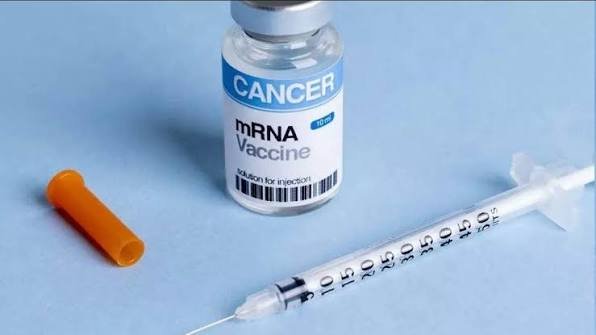
Cancer is one of the most relentless diseases the world has ever faced. Despite decades of research, billions in funding, and countless clinical breakthroughs, it still claims millions of lives every single year. Treatments like chemotherapy and radiation have extended lives — but they come at a brutal cost to the body. That is why the world took notice when news broke about the russia enteromix cancer vaccine.
In 2024 and 2025, headlines across the globe lit up with a single claim: Russia had developed a cancer vaccine that could change everything. Social media exploded. Medical communities debated. Patients and families searched desperately for answers.
But what is the truth behind this story? Is the russia enteromix cancer vaccine the medical breakthrough it has been called — or is the reality more complicated?
This article cuts through the noise. It breaks down what Enteromix actually is, how it works, what the clinical data really shows, and what happens next. Whether you are a curious reader or someone personally affected by cancer, this is the honest, balanced guide you need.
What Is the Russia Enteromix Cancer Vaccine?
To understand why this vaccine matters, you first need to understand what it is — and, just as importantly, what it is not.
The russia enteromix cancer vaccine is a therapeutic, oncolytic virus-based cancer treatment developed jointly by Russia’s National Medical Research Radiology Centre (NMRRC) and the Engelhardt Institute of Molecular Biology. It is not a preventive vaccine like the flu shot or the COVID-19 vaccine. You do not take it to stop yourself from getting cancer. Instead, it is designed for people who already have cancer — specifically to fight and potentially destroy tumors that have already formed.
The Federal Medical and Biological Agency (FMBA) has been at the forefront of pushing this vaccine through development. FMBA chief Veronika Skvortsova has spoken publicly about the vaccine’s promise, calling it a genuinely personalized treatment tailored to each patient’s biological makeup.
Who Made It and Why It Matters
The two institutions behind Enteromix are not newcomers to cancer research. The National Medical Research Radiology Centre operates under Russia’s Ministry of Health and has been involved in oncology research for decades. The Engelhardt Institute of Molecular Biology has deep expertise in molecular and genetic sciences. Together, they built a vaccine that takes a fundamentally different approach to fighting cancer.
Russia is also simultaneously working on a second, separate cancer vaccine program — a personalized mRNA vaccine being developed in cooperation with the Gamaleya Institute, which is the same body behind the Sputnik V COVID-19 vaccine. Many media reports have confused these two programs. Enteromix and Russia’s mRNA cancer vaccine are different treatments with different mechanisms. It is important to understand this distinction before forming any conclusions.
How the Russian Cancer Vaccine Enteromix Actually Works
The science behind Enteromix is genuinely fascinating, and understanding it makes the results far more meaningful.
The Four-Virus Formula
At its core, Enteromix uses a combination of four non-pathogenic viruses. The term “non-pathogenic” means these viruses cannot cause disease in humans — they have been specifically engineered or selected for safety. These four viruses are designed to do two things simultaneously:
- Destroy malignant cancer cells directly
- Activate the patient’s own antitumor immune response
This is called oncolytic virotherapy. The idea has existed in cancer research for several decades, but translating it into a clinically viable, effective treatment has always been the challenge.
When the viruses are introduced into the body, they selectively seek out cancer cells. Healthy cells have natural defenses that reject viral infection. Cancer cells, however, often lose these defenses during mutation — making them vulnerable. The engineered viruses exploit that vulnerability, infecting and killing the tumor cells from within.
At the same time, when cancer cells are destroyed, they release what are called “danger signals.” These signals alert the immune system that something harmful is present. The immune system then mounts a broader attack, not just on the immediate tumor, but on cancer cells throughout the body. This dual action — direct cell killing plus immune activation — is what makes the oncolytic approach so compelling.
How Personalization Plays a Role
Unlike traditional treatments that follow a fixed protocol regardless of the patient, Enteromix is built around the individual. Doctors extract a sample from the patient’s tumor, analyze its RNA, and identify the specific mutations driving that particular cancer. This information is used to customize the vaccine response so the immune system learns to recognize and attack cells with those exact mutations.
This level of personalization is what separates Enteromix — and cancer vaccine science in general — from older generations of cancer treatment. Rather than poisoning the whole body to kill the tumor, the goal is to teach the immune system to do it precisely.
How It Differs From Chemotherapy
Chemotherapy floods the body with toxic chemicals that kill rapidly dividing cells. Cancer cells divide fast — but so do hair follicles, gut lining cells, and bone marrow cells. That is why chemotherapy causes hair loss, nausea, and immune suppression. It is effective, but indiscriminate.
Radiation therapy is targeted to a region of the body, but still causes collateral damage to surrounding healthy tissue. Enteromix, in theory, avoids most of this systemic damage because the viruses target cancer biology specifically. That said, it is important to note that long-term safety data across large populations is still being gathered.
Russia Enteromix Cancer Vaccine — What the Trial Data Actually Shows
This is where careful reading becomes essential. There has been significant misrepresentation of the trial data in media and on social platforms. Here is what the evidence genuinely shows.
Three Years of Preclinical Testing
Before any vaccine reaches human patients, it must pass preclinical trials — testing in laboratory settings and animal models. In September 2025, the FMBA officially announced that the russia enteromix cancer vaccine had successfully completed more than three years of preclinical testing. The results were promising on two key fronts: the antitumor effect ranged from slowing tumor growth to complete tumor destruction, and the safety profile showed no significant adverse effects.
That is meaningful. Three years of preclinical work is not trivial. It confirms that the mechanism works in controlled environments and that the treatment does not appear to be inherently dangerous.
Phase I Human Trials
The first human trials began in June 2025 with 48 patients diagnosed with colorectal cancer. Phase I trials are primarily designed to assess safety, dosage, and tolerability — not to prove large-scale efficacy. That context is critical.
Within the scope of this Phase I study, some patients showed tumor reduction in the range of 60 to 80 percent. Early-stage patients in some cases showed complete tumor elimination. No serious side effects were reported even after patients received repeated doses. These are genuinely encouraging early signals.
In May 2026, the trial was formally registered on ClinicalTrials.gov under identifier NCT07584668, providing the first internationally verifiable record of the ongoing study.
What “100% Efficacy” Claims Really Mean
Across social media — particularly in Africa and Southeast Asia — posts spread rapidly claiming Enteromix had achieved 100 percent efficacy and was already available as a free cure for all cancers. Independent fact-checking organizations, including Snopes and CEDMO, investigated and found these claims to be exaggerated and misleading.
Oncology vaccine specialists pointed out that Phase I data cannot be extrapolated into universal efficacy claims. The trial involved 48 patients. There are no randomized control groups in Phase I. There are no long-term survival statistics yet. The vaccine has not been evaluated across multiple cancer types in structured trials. These are not criticisms of the vaccine itself — they are standard requirements of medical science before any treatment can be called proven.
The FMBA itself stated that the vaccine is awaiting approval to proceed to the next phase of trials — not that it has been approved for general clinical use.
Which Cancers Is Enteromix Targeting?
Colorectal Cancer: The Primary Focus
The first Phase I trial centered on colorectal cancer patients. This choice is deliberate. Colorectal cancer is one of the fastest-growing cancer types globally, particularly among adults under 50. In many cases, patients with advanced colorectal cancer have exhausted standard treatment options — which makes them viable candidates for early-phase experimental trials.
Russian officials confirmed in December 2024 that people with a confirmed diagnosis of a solid, inoperable tumor with no standard treatment options available would be eligible to participate in clinical trials.
Expanding to Other Cancer Types
Following colorectal cancer, Russian health officials planned for lung cancer patients to become the second group enrolled in Enteromix trials. Melanoma patients have also been included in related vaccine trial phases. The longer-term ambition is to apply the oncolytic approach to aggressive and treatment-resistant solid tumors, including glioblastoma — one of the most difficult brain cancers to treat.
This expansion makes scientific sense. If the four-virus formula activates a broad immune response by exploiting common cancer-cell vulnerabilities, there is theoretical reason to believe it could be adapted for multiple tumor types. However, each cancer type will require its own dedicated trial program before any specific efficacy claim can be made.
How Russia’s Enteromix Fits Into the Global Cancer Vaccine Race
Russia is not alone in pursuing this frontier. The global push for therapeutic cancer vaccines has never been more intense, and understanding the competitive landscape gives Enteromix’s development important context.
What Western Programs Are Doing
BioNTech, in partnership with Pfizer, is advancing its personalized mRNA cancer vaccine program, with Phase III trials expanding globally and regulatory submissions anticipated in 2026. Moderna has a similar program, mRNA-4157 developed in collaboration with Merck, which has shown strong sustained efficacy in melanoma patients at three-year follow-up — with recurrence-free survival significantly better than immunotherapy alone.
Memorial Sloan Kettering Cancer Center has reported remarkable results with a BioNTech-partnered mRNA vaccine for pancreatic cancer, with immune responses persisting for nearly four years in some patients.
These are all different technologies and approaches, but the underlying mission is the same: train the immune system to recognize and destroy cancer with precision.
Where Russia Stands
The russia enteromix cancer vaccine takes a different technological path — oncolytic virotherapy rather than mRNA encoding. This is not inferior; it is complementary. Different cancer types and patient profiles may respond better to different mechanisms. If both approaches advance through trials successfully, the oncology field benefits from having multiple tools.
Russia’s program faces a credibility challenge that Western programs largely do not: the absence of published, peer-reviewed data in internationally indexed medical journals. The international medical community evaluates treatments based on transparent, reproducible data. Until that data is available and independently reviewed, even the most promising Russian results will be viewed with measured skepticism outside Russia’s borders.
Challenges That Remain
Beyond the data transparency issue, there are practical hurdles. Personalized vaccines are by nature resource-intensive and logistically complex. Each treatment must be custom-manufactured for each individual patient. Scaling this to millions of patients, even within Russia, requires enormous infrastructure. Cold-chain storage requirements add another layer of difficulty. These are problems the entire field is grappling with — not just Russia.
Cost, Accessibility, and Russia’s Free Distribution Plan
One of the most widely circulated claims about Enteromix is that it will be available to patients completely free of charge. Russian state media outlet RBC quoted health ministry official Andrei Kaprin confirming that while the treatment would cost the state approximately 300,000 rubles — roughly $3,500 per patient — it would be provided to patients at no cost.
This is a meaningful policy commitment, particularly in contrast to the commercial model that dominates Western pharmaceutical development, where cancer treatments can cost tens of thousands of dollars per month.
However, independent experts have pointed out that this promise is difficult to fulfill at scale in the near term. A personalized vaccine requires individual tumor sequencing, customized manufacturing, and specialized medical oversight. Delivering that free to a large patient population requires enormous state investment and infrastructure. The promise is real — the timeline and scope remain to be seen.
For patients outside Russia, access to Enteromix does not currently exist in any formal, regulated pathway. Any claims suggesting global availability are premature.
What Experts Are Saying
The Case for Optimism
Scientists working in the field of cancer immunotherapy acknowledge that the foundations of Enteromix are scientifically legitimate. Oncolytic virotherapy is a real, active area of global research. The concept of using engineered viruses to selectively destroy cancer cells while activating immune responses has been studied for over two decades. The preclinical evidence showing tumor suppression and a strong safety profile is a meaningful foundation.
The Phase I data — while limited in scope — is directionally positive. Tumor reductions of 60 to 80 percent in early-stage patients represent genuine biological activity. The absence of serious side effects after repeated doses is an important safety signal.
The Case for Caution
At the same time, experienced oncologists are clear: Phase I data does not equal proof of efficacy. Studies published in journals like Frontiers in Oncology emphasize that more extensive, randomized trials are urgently needed to validate cancer vaccines before clinical adoption.
The lack of peer-reviewed publications from the Enteromix program in internationally recognized journals is a significant gap. Science advances through scrutiny — through other researchers attempting to replicate, challenge, and verify findings. Until that process happens with Enteromix, the global medical community will rightly maintain cautious optimism rather than enthusiasm.
What Comes Next for the Russia Enteromix Cancer Vaccine
The path forward is clear, even if the timeline is not.
The formal registration of the trial on ClinicalTrials.gov in May 2026 is a meaningful step. It means the study can now be tracked, monitored, and eventually peer-reviewed against international standards. That transparency is exactly what the scientific community has been calling for.
The next phase of trials will need to enroll larger, more diverse patient populations across multiple cancer types. Phase II trials will need to demonstrate statistically significant efficacy — not just tumor reduction signals, but improvements in progression-free survival and overall survival rates. Phase III trials will require comparison against existing standard-of-care treatments in randomized, controlled settings.
If Enteromix succeeds through this full process, it will not just be a Russian story. It will be a global turning point in how cancer is treated — moving the field decisively toward precision, immune-based therapy rather than systemic, toxic treatments.
That outcome is not guaranteed. But the foundation is real, the science is legitimate, and the world is watching.
Conclusion
The russia enteromix cancer vaccine represents one of the most genuinely interesting developments in oncology in recent years. It is built on sound scientific principles, backed by meaningful preclinical data, and now progressing through its first human trials. The early results have given researchers real reasons to be encouraged.
At the same time, honesty demands that we separate what is known from what is hoped. This vaccine is in Phase I trials. It has not been peer-reviewed in international journals. It has not been approved for general clinical use. The headlines calling it a “cure” were wrong. The dismissals calling it propaganda were also too quick.
The truth is that the russia enteromix cancer vaccine is a promising experimental treatment in the early stages of clinical validation. The next two to three years of trial data will determine whether it lives up to that promise. For now, the most responsible thing anyone can do is follow the science, not the headlines.
Cancer patients and their families deserve accurate information — and Enteromix, if its early signals hold up under rigorous scrutiny, could one day be part of the answer they have been waiting for.
Frequently Asked Questions (FAQs)
1. What is the russia enteromix cancer vaccine? The russia enteromix cancer vaccine is a therapeutic, oncolytic virus-based treatment developed by Russia’s National Medical Research Radiology Centre and the Engelhardt Institute of Molecular Biology. It uses four non-pathogenic viruses to destroy cancer cells and activate the patient’s immune system against tumors. Unlike preventive vaccines, it is designed for people already diagnosed with cancer.
2. Is the Enteromix cancer vaccine approved for general use? As of mid-2026, the russia enteromix cancer vaccine has not received full regulatory approval for general clinical use. It completed preclinical trials in September 2025 and entered Phase I human trials in June 2025 with 48 colorectal cancer patients. It is still going through the clinical evaluation process required before it can be prescribed broadly.
3. How does the Enteromix vaccine differ from chemotherapy? Chemotherapy is a systemic treatment that affects the entire body, including healthy cells, leading to side effects like hair loss and immune suppression. The russia enteromix cancer vaccine targets cancer cells specifically through engineered viruses and immune activation, aiming to destroy tumors with less collateral damage to healthy tissue. However, long-term comparative data is still being gathered.
4. What types of cancer does Enteromix treat? The Phase I trials initially focused on colorectal cancer patients. Plans are in place to expand trials to lung cancer and melanoma patients in subsequent phases. Longer-term goals include testing Enteromix against aggressive tumors like glioblastoma, though each cancer type requires its own dedicated clinical trial program.
5. What did Phase I trials of Enteromix show? Phase I trials with 48 colorectal cancer patients showed tumor reduction of 60 to 80 percent in some cases, with complete elimination observed in early-stage patients. No serious side effects were reported after repeated doses. Importantly, Phase I trials are designed to assess safety and dosage — not to prove large-scale efficacy across general populations.
6. Is Enteromix the same as Russia’s mRNA cancer vaccine? No. These are two separate programs. The russia enteromix cancer vaccine is an oncolytic viral vaccine that uses four engineered viruses to destroy cancer cells. Russia’s mRNA cancer vaccine is a separate therapeutic being developed in cooperation with the Gamaleya Institute, which works at the molecular level to program a specific immune response. Media reports have frequently confused the two.
7. Will the Enteromix cancer vaccine be available for free? Russian officials confirmed that while treatment would cost the state approximately 300,000 rubles (around $3,500) per patient, it would be provided free of charge to eligible patients in Russia. However, delivering a personalized vaccine free at large scale involves enormous logistical challenges, and international availability through any regulated pathway does not currently exist.
8. Has Enteromix been reviewed by international medical journals? As of 2026, the russia enteromix cancer vaccine has not been published in major internationally peer-reviewed oncology journals. Some academic reviews referencing it have appeared, but the primary trial data from the FMBA and NMRRC has not yet undergone the independent scientific scrutiny that the global medical community requires before forming definitive conclusions.
9. How is Enteromix personalized for each patient? Doctors extract a tumor sample from each patient and analyze its RNA to identify the specific genetic mutations driving that individual’s cancer. This information is used to tailor the vaccine so the immune response it generates is specifically trained to recognize and attack those unique cancer cell characteristics. This personalization is one of the key features that distinguishes Enteromix from standard cancer treatments.
10. What is the next step for the russia enteromix cancer vaccine? Following Phase I safety and dosage trials, the next step is Phase II trials, which will need to demonstrate statistically meaningful efficacy in larger, more diverse patient groups. The trial was registered on ClinicalTrials.gov in May 2026 under identifier NCT07584668, making it internationally trackable. Regulatory approval and broader clinical use will depend on the outcomes of Phase II and Phase III trials.