
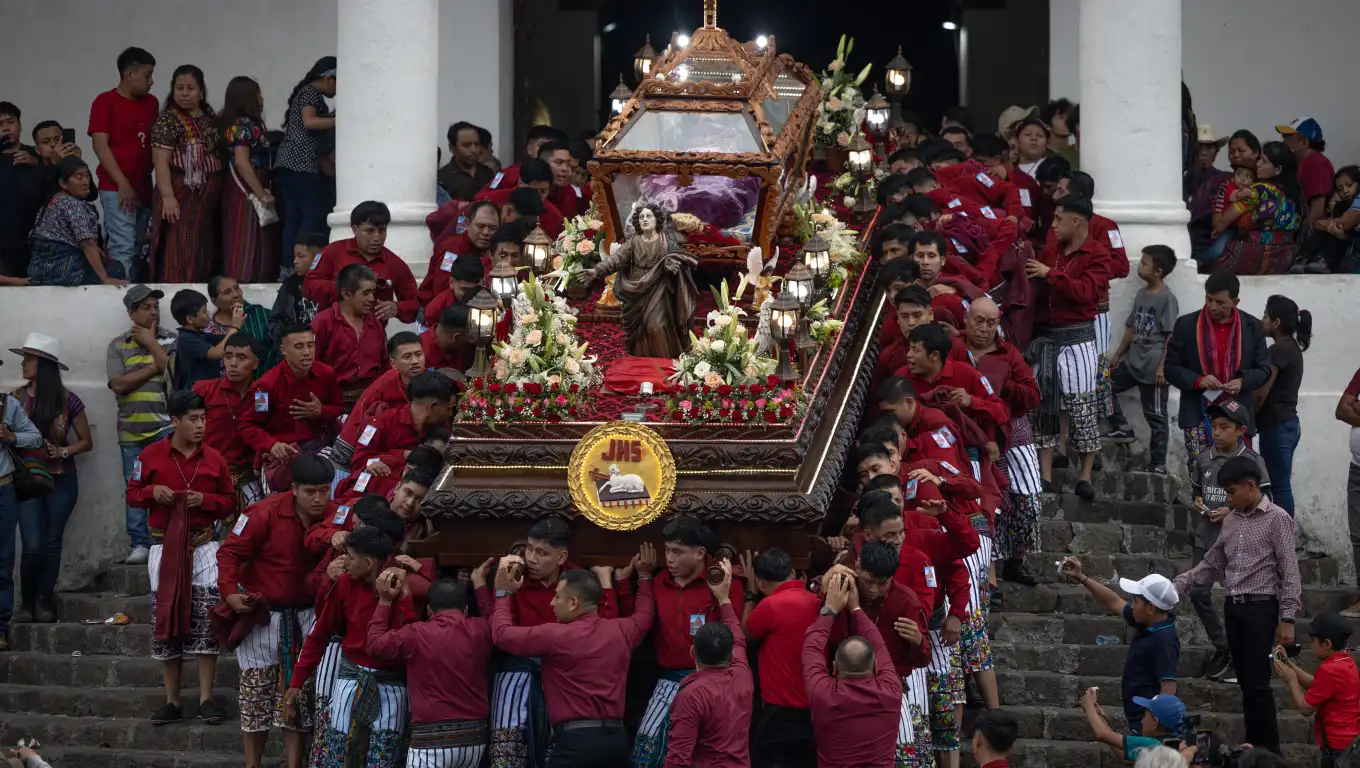
There is something about Holy Week that stops time. Church bells echo through cobblestone streets. Thousands of candles flicker against the night sky. Enormous religious floats — draped in flowers, gold, and incense smoke — move slowly through crowded plazas as thousands of faithful follow in silence or song.
Semana Santa 2026 brought all of that and more.
Whether you were searching for the exact dates, planning a trip to Ayacucho, or simply curious about what makes this week so significant across the Spanish-speaking world, this guide covers everything. From the official calendar and key religious moments to the most breathtaking celebrations in Peru and beyond, here is your complete, up-to-date reference for Holy Week 2026.
Let’s start with the question most people ask first.
¿Cuándo Es Semana Santa 2026? Fechas Exactas y Días Festivos
If you have been wondering cuando es semana santa 2026 or cuando cae semana santa 2026, the answer is clear and straightforward.
Semana Santa 2026 ran from Sunday, March 29, through Sunday, April 5.
The week opened with Domingo de Ramos (Palm Sunday) on March 29 and closed with Domingo de Pascua (Easter Sunday) on April 5. These are the official boundaries of Holy Week on the Catholic liturgical calendar, though in many countries — especially Peru — the surrounding days are equally packed with religious and cultural activity.
Here is a clean breakdown of the key dates:
- March 29 — Domingo de Ramos (Palm Sunday): The week begins with the blessing of palms and the commemoration of Jesus’s entry into Jerusalem. Masses were held worldwide, with the Vatican ceremony led by Pope Leo XIV — marking his first Holy Week as head of the Catholic Church.
- April 2 — Jueves Santo (Holy Thursday): The Mass of the Lord’s Supper commemorates the Last Supper. Churches opened for the traditional visit to seven churches, a practice especially popular in Peru and the Philippines.
- April 3 — Viernes Santo (Good Friday): The most solemn day of the year. No Mass is celebrated. Instead, the Passion of the Lord is read, the Cross is venerated, and processions move through city streets well into the night.
- April 4 — Sábado Santo (Holy Saturday): A day of waiting and reflection, ending with the luminous Easter Vigil after sundown.
- April 5 — Domingo de Pascua (Easter Sunday): The culmination — the celebration of the Resurrection. In Ayacucho, this meant a pre-dawn procession beginning at 5:00 a.m., carrying the world’s largest religious float through the Plaza Mayor.
Why Do the Dates Change Every Year?
This is one of the most common questions around semana santa 2026 fechas — and every year before and after.
Easter is a moveable feast. Its date is calculated using an ancient formula: the first Sunday after the first full moon following the spring equinox (March 21). This means Easter can fall anywhere between March 22 and April 25 depending on the lunar cycle.
In 2026, the full moon aligned to place Easter on April 5 — a relatively early date within the possible range.
Feriados de Semana Santa 2026 en Perú
In Peru, Good Friday (Viernes Santo) is an official national public holiday. Most government offices, schools, and many private businesses close for the full Easter weekend. Some regions declare additional non-working days around Holy Week to accommodate the high volume of religious events and domestic tourism.
For travelers planning around semana santa 2026 in Peru, this means transport systems — buses, domestic flights, train routes to Machu Picchu — book up weeks or even months in advance. Planning early is not just a recommendation; it is a necessity.
The Meaning Behind Holy Week — Faith, History, and Living Tradition
Before diving into the celebrations themselves, it helps to understand what Semana Santa actually commemorates and why it carries such weight for so many people.
Holy Week re-lives the final days of Jesus Christ’s life: his triumphant entry into Jerusalem, the Last Supper with his disciples, his arrest, trial, crucifixion, death, and resurrection. For practicing Catholics and many other Christians, this is the most sacred period of the entire year — more important even than Christmas, because Easter is considered the foundation of the Christian faith itself.
The traditions connected to Holy Week are ancient. Processions date back to the early medieval church. The cofradías (religious brotherhoods) that organize many Spanish-style processions have existed for five centuries. The fusion of Catholic observance with indigenous Andean culture in places like Ayacucho began in the 1500s, when Spanish missionaries arrived and found communities whose spiritual practices were already deeply rooted.
2026: A Historic Year for the Catholic Church
Semana Santa 2026 carried an additional layer of significance for Catholics worldwide.
This was the first Holy Week presided over by Pope Leo XIV, who had recently been elected following the death of Pope Francis. The Vatican’s official schedule included the Palm Sunday Mass, the Chrism Mass, the Evening Mass of the Lord’s Supper, the solemn Passion of the Lord service, the iconic Via Crucis at the Colosseum on Good Friday evening, the Easter Vigil, and the Easter Sunday Mass with the Urbi et Orbi blessing.
For millions of faithful tuning in from around the world, these ceremonies marked not just a spiritual milestone but a historical one.
Semana Santa 2026 en Ayacucho — La Capital de la Fe Andina
No conversation about semana santa 2026 in Peru is complete without Ayacucho. It would take a separate article — honestly, a full book — to capture what this city does during Holy Week. But here is a thorough overview of why Ayacucho earned its title as Peru’s capital of Semana Santa, and what made 2026 particularly extraordinary.
The History Behind Ayacucho’s Holy Week
The story of Ayacucho’s Semana Santa begins in the colonial era. When Spanish missionaries arrived in the region, Ayacucho (then known as Huamanga) became one of the primary centers of Catholic evangelization in the Andes. The evidence of that history is literally built into the city: Ayacucho’s historic center is home to 33 churches — an extraordinary density for a city of its size.
Over five centuries, the Catholic traditions brought by missionaries blended with the spiritual and cultural practices of the indigenous Andean population. The result is a celebration that is neither purely European nor purely indigenous, but something entirely its own. Hymns are sung in Quechua as well as Spanish. Processions are accompanied by andas (ornate religious floats) decorated with mazorcas de maíz (corn) and pontiwayta flowers alongside more traditional Catholic imagery. The streets are carpeted with elaborate floral designs created by neighborhood families working through the night.
This is not a performance staged for tourists. It is a living tradition that the people of Ayacucho have maintained, protected, and passed down through generations.
The 2026 Program: Ten Days of Faith and Celebration
The official launch of semana santa 2026 in Ayacucho took place on March 4 at the Basílica Catedral de Ayacucho, with local and national authorities presenting the program under the motto: “Semana Santa, Ayacucho vive tu fe” — Holy Week, Ayacucho lives your faith.
The celebrations ran from March 26 all the way through April 5 — ten full days of processions, Masses, cultural events, and community gatherings.
Here is how the days unfolded:
Domingo de Ramos (Palm Sunday, March 29) The week’s official religious opening began at the Monasterio de Santa Teresa with the blessing of palms and a solemn Mass. Then the procession of the Señor de Ramos departed from the Santa Teresa temple, traveling down Jirón 28 de Julio toward the Basílica Catedral de Ayacucho. The plaza filled with thousands of faithful holding palm fronds.
Lunes Santo (Holy Monday) The Señor de la Parra — a uniquely Ayacucho tradition — made its procession. This anonymous wooden sculpture is adorned with clusters of grapes (racimos de uva), symbolizing the eucharistic wine. The float departed from the temple of Pampa de San Agustín and moved through the city’s main streets.
Martes Santo (Holy Tuesday) Two processions marked this night. The image of Cristo Salvador del Mundo departed at 7:00 p.m. from the temple of San Juan Bautista. Later, the Señor de la Agonía and the Santísima Virgen Dolorosa were venerated at the temple of Santa María Magdalena, with the procession — including images of San Juan and La Verónica — drawing hundreds of faithful into the streets.
Miércoles Santo (Holy Wednesday) — The Encuentro This is arguably the most emotionally powerful night of the entire week. The Encuentro (Encounter) brings together the images of Jesús de Nazareno, the Virgen Dolorosa, and La Verónica in the Plaza Mayor de Huamanga. The streets approaching the plaza were carpeted overnight with floral designs made from flowers and colored sawdust by local families. Thousands of candles lit the scene as the images came face-to-face in a reenactment of Christ meeting his mother on the road to Calvary.
Jueves Santo (Holy Thursday) The traditional visit to seven churches began at 7:00 p.m. at the Catedral, with Archbishop Salvador Piñeiro presiding. Later, a dramatic representation of the Last Supper took place for the assembled crowd. The evening built toward the solemn night watch.
Viernes Santo (Good Friday) At 10:30 a.m., the Cristo Crucificado was transferred from the temple of La Compañía de Jesús to the Cathedral. Then, at 8:00 p.m., the most solemn procession of the week began: the Señor del Santo Sepulcro and the Virgen Dolorosa departed from the Santo Domingo temple toward the Plaza Mayor, moving slowly through streets lined with thousands of silent, candlelit faithful.
Sábado Santo (Holy Saturday) At noon, the Trono Watay — the assembled throne structure for the Easter Sunday float — was received by the mayordomos (community custodians). At 7:00 p.m., the solemn Easter Vigil was celebrated at the Cathedral.
Domingo de Pascua (Easter Sunday, April 5) The week reached its thundering conclusion in the pre-dawn hours. At 4:00 a.m., the Pascua Mass was celebrated. At 5:00 a.m., the Señor de Pascua de Resurrección departed on the world’s largest religious float, carrying the risen Christ image through the Plaza Mayor de Huamanga. At 6:00 a.m., an extraordinary solemn Mass was celebrated entirely in Quechua at the Cathedral.
The World’s Largest Religious Float
The float itself deserves its own mention.
For semana santa 2026, the team at Cera Wasi — the artisan workshop run by the Hurtado family, which has been building this structure for over 50 years — constructed an anda weighing 15 tons. Approximately 400 men were selected in the early hours of Easter Sunday to carry it.
The assembly began on Holy Thursday and continued through Saturday. On Easter Sunday morning, the massive structure circled the Plaza Mayor, stopping at each of the four corners for prayers, as thousands of faithful crowded every inch of available space around the square.
It is, by any measure, one of the most extraordinary religious spectacles on the planet.
Pascua Toro — A Tradition Unlike Any Other
Alongside the religious processions, Ayacucho holds the Pascua Toro — a centuries-old tradition that fuses Andean festival culture with the Easter season. In 2026, the event took place in the district of Carmen Alto at the Quicapata esplanade, from April 2 to 4, with the central day on Saturday, April 4. Authorities expected approximately 6,000 visitors for this unique cultural event — a testament to its enduring place in the regional calendar.
Holy Week Celebrations Around the World in 2026
Ayacucho is exceptional, but it is far from the only place where semana santa 2026 left a lasting impression.
Cusco, Peru In the ancient Inca capital, Easter Week processions blend Catholic iconography with the visual language of Andean culture. The procession of the risen Christ is accompanied by local saints including San Sebastián and Santa Ana — figures that carry deep roots in both the colonial and pre-colonial spiritual histories of the region.
Sevilla, Spain Seville is the global benchmark for Holy Week processions. The cofradías (religious brotherhoods) have organized these events for five centuries. Enormous pasos — floats depicting scenes from the Passion — are carried through narrow Andalusian streets by teams of costaleros (bearers) who work in pitch darkness beneath the structure. The crowds, the music, the incense, the thousands of nazarenos (penitents) in pointed hoods: Seville’s Semana Santa is theatrical, profound, and completely unlike anything else in the world.
Antigua, Guatemala Antigua’s Holy Week is one of the most visually striking in Latin America. Like Ayacucho, the streets are carpeted with elaborate designs made from colored sawdust, flowers, pine needles, and fruit. The purple-robed processions move over these carpets, destroying and transforming them simultaneously — a visual metaphor for the week’s themes of sacrifice and renewal.
Iztapalapa, Mexico City The Vía Crucis of Iztapalapa is the largest Passion play in the world by attendance, drawing hundreds of thousands of spectators each year. The dramatic re-enactment of Christ’s trial, carrying of the cross, and crucifixion is performed with actors from the community in a tradition stretching back to 1843.
Across all of these places — and in churches, homes, and communities worldwide — semana santa 2026 was a week of shared reflection and communal faith.
Guía Práctica: How to Experience Semana Santa Fully
Whether you attended in person or followed from home, there are ways to engage with Holy Week that go beyond simply watching.
If You Were Visiting Ayacucho
Traveling to Ayacucho for semana santa 2026 — or for any future Holy Week — requires serious advance planning.
- Accommodation: The city reaches full capacity weeks before Holy Week. Hotels, guesthouses, and even private room rentals fill up early. Booking two to three months ahead is strongly advised.
- What to Wear: Comfortable layers are essential. Ayacucho sits at over 2,700 meters above sea level. Days can be warm and sunny; nights drop sharply. Bring a warm jacket, comfortable walking shoes (processions can last hours), and a small umbrella for unexpected rain.
- Where to Stand: The Plaza Mayor de Huamanga is the heart of everything. Jirón 28 de Julio is one of the most photographed streets during processions. Arrive early to claim a good vantage point.
- Food to Try: Ayacucho’s gastronomy is a highlight in its own right. Look for puca picante (pork in a rich red peanut sauce) and caldo de mondongo (hearty tripe soup) — both are deeply local, deeply traditional, and absolutely worth seeking out.
- Artisan Workshops: The Santa Ana neighborhood is a short walk from the plaza. Here, master artisans produce retablos (miniature altarpieces), textiles, filigree jewelry, and carvings in Huamanga stone. Many workshops open their doors to visitors during Holy Week.
Following Along from Home
You do not need to be in Ayacucho — or even in the same hemisphere — to participate meaningfully in Holy Week.
- Follow the Vatican’s livestreamed ceremonies, which are broadcast globally and subtitled in multiple languages.
- Attend services at your local parish. The progression from Palm Sunday through Easter Sunday tells a complete, coherent story that deepens with each year.
- Cook traditional Holy Week foods from your family’s culture or from a region you admire.
- Read or watch something connected to the themes of the week — there is a long tradition of Holy Week films, literature, and music worth exploring.
Semana Santa as an Economic Force
It is worth noting that semana santa 2026 was not only a spiritual event but a significant economic one for Peru’s regions.
Authorities in Ayacucho highlighted that Holy Week drives substantial activity across tourism, hospitality, transport, artisan sales, and gastronomy. Tens of thousands of domestic and international visitors flood into Huamanga, generating income that supports the regional economy for weeks. This dual nature of the celebration — sacred and economic — is not a contradiction. It is a reflection of how deeply Holy Week is woven into the social fabric of the region.
Semana Santa 2026: FAQs
1. ¿Cuándo es Semana Santa 2026? Semana Santa 2026 ran from March 29 (Palm Sunday) through April 5 (Easter Sunday). The key public holiday in most Latin American countries is Good Friday, April 3, which is typically a national non-working day.
2. ¿Cuándo cae Semana Santa 2026 exactamente? Domingo de Ramos fell on March 29, Jueves Santo on April 2, Viernes Santo on April 3, Sábado Santo on April 4, and Domingo de Pascua on April 5. These dates were determined by the lunar calendar, which places Easter on the first Sunday after the first full moon following March 21.
3. ¿Por qué cambia la fecha de Semana Santa cada año? Because Easter is tied to the lunar calendar rather than a fixed solar date. The calculation uses the spring equinox and the first subsequent full moon, which shifts the date of Easter between March 22 and April 25 from one year to the next.
4. ¿Es Viernes Santo feriado en Perú en 2026? Yes. Good Friday (Viernes Santo) is an official national public holiday in Peru. Schools, government offices, and many businesses closed on April 3, 2026. Some regions added additional non-working days around the Easter weekend.
5. ¿Qué hace especial la Semana Santa de Ayacucho? Ayacucho holds more than ten processions throughout the week, each with its own distinct identity. The city’s 33 historic churches, its five-century tradition of Andean-Catholic fusion, the world’s largest religious float, and the pre-dawn Easter Sunday Mass in Quechua make it an experience found nowhere else on earth.
6. ¿Cuántos días duran las celebraciones de Semana Santa 2026 en Ayacucho? While the liturgical week runs from Palm Sunday to Easter Sunday (8 days), Ayacucho’s official program for semana santa 2026 extended from March 26 to April 5 — a full ten-day celebration of faith, culture, and community.
7. ¿Qué es el Pascua Toro en Ayacucho? The Pascua Toro is a centuries-old regional tradition that takes place alongside the religious processions of Holy Week in Ayacucho. It is held in the Carmen Alto district and blends Andean festival culture with the Easter season, drawing thousands of visitors. In 2026, it was held at the Quicapata esplanade from April 2 to 4.
8. ¿Por qué tiene Ayacucho 33 iglesias en su centro histórico? Ayacucho was one of the main centers of Spanish Catholic evangelization in the Andes during the colonial period. The intense missionary activity of the 16th and 17th centuries resulted in a remarkable concentration of churches, chapels, and convents built in and around the city — 33 in total, a number that still defines the character of the historic center today.
9. ¿Qué tan grande es el anda del Señor de Resurrección en Ayacucho? For semana santa 2026, the float weighed 15 tons and required approximately 400 people to carry it through the Plaza Mayor de Huamanga. It is widely considered the largest religious float in the world. The structure has been built by the Cera Wasi workshop (Cerería Hurtado) for over 50 consecutive years.
10. ¿Cómo puedo planificar un viaje a Ayacucho para la Semana Santa del próximo año? Start planning at least three to four months in advance. Accommodation fills up quickly — look for hotels near the Plaza Mayor for the best access to procession routes. Book domestic flights or buses early, dress in layers for the altitude and temperature swings, bring comfortable shoes for long nighttime processions, and set aside time to visit the Santa Ana artisan neighborhood and try the local cuisine.
Conclusion
Semana Santa is one of those rare events that holds something for everyone — the devout, the culturally curious, the traveler, and the homebody watching livestreamed Vatican ceremonies from a kitchen table.
In 2026, Holy Week arrived with particular weight. New papal leadership. Ancient traditions continuing without interruption. Thousands of people in Ayacucho carrying a 15-ton float through a pre-dawn plaza. Families everywhere lighting candles, gathering for meals, and observing a rhythm that has repeated, with variations, for five centuries.
The dates for semana santa 2026 have now passed, but the traditions they carried are already preparing for next year. If you missed Ayacucho this time, start planning now. Book your accommodation early, research the procession schedule, pack your warmest layer for the cold Andean nights, and prepare for something that no photograph or article — including this one — can fully capture.
Some things have to be lived to be understood. Semana Santa is one of them.