
There is a moment every dog owner recognizes. You are standing in the pet food aisle, staring at rows of bags and cans, trying to decode ingredient lists that read more like chemistry homework than a meal plan. At some point, a simple question forms in your head: is there something better out there?
For millions of pet owners in the United States, the answer has been fresh dog food. Over the past several years, the category has grown from a niche idea into a genuine industry. Real ingredients. Gentle cooking methods. No artificial preservatives or mystery fillers. The idea is straightforward, but the market is anything but simple.
There are dozens of fresh dog food brands available today, and not all of them are created equal. Some use genuinely high-quality ingredients and transparent manufacturing. Others lean heavily on marketing language that sounds impressive but means very little in practice. Knowing the difference is what this guide is here to help you do.
Whether you are switching for the first time or reconsidering your current choice, this article covers everything that matters — from how fresh dog food is actually defined, to which brands stand out in 2026, to how diet affects long-term health conditions like bladder stones. By the end, you will have a clear, practical picture of what to look for and how to choose wisely.
Understanding What Sets Fresh Dog Food Brands Apart
Before comparing any brand, it helps to understand what “fresh” actually means in the pet food world. The word is used loosely, and that is a problem.
Commercially, “fresh” describes four distinct types of dog food production, and they are not nutritionally equivalent.
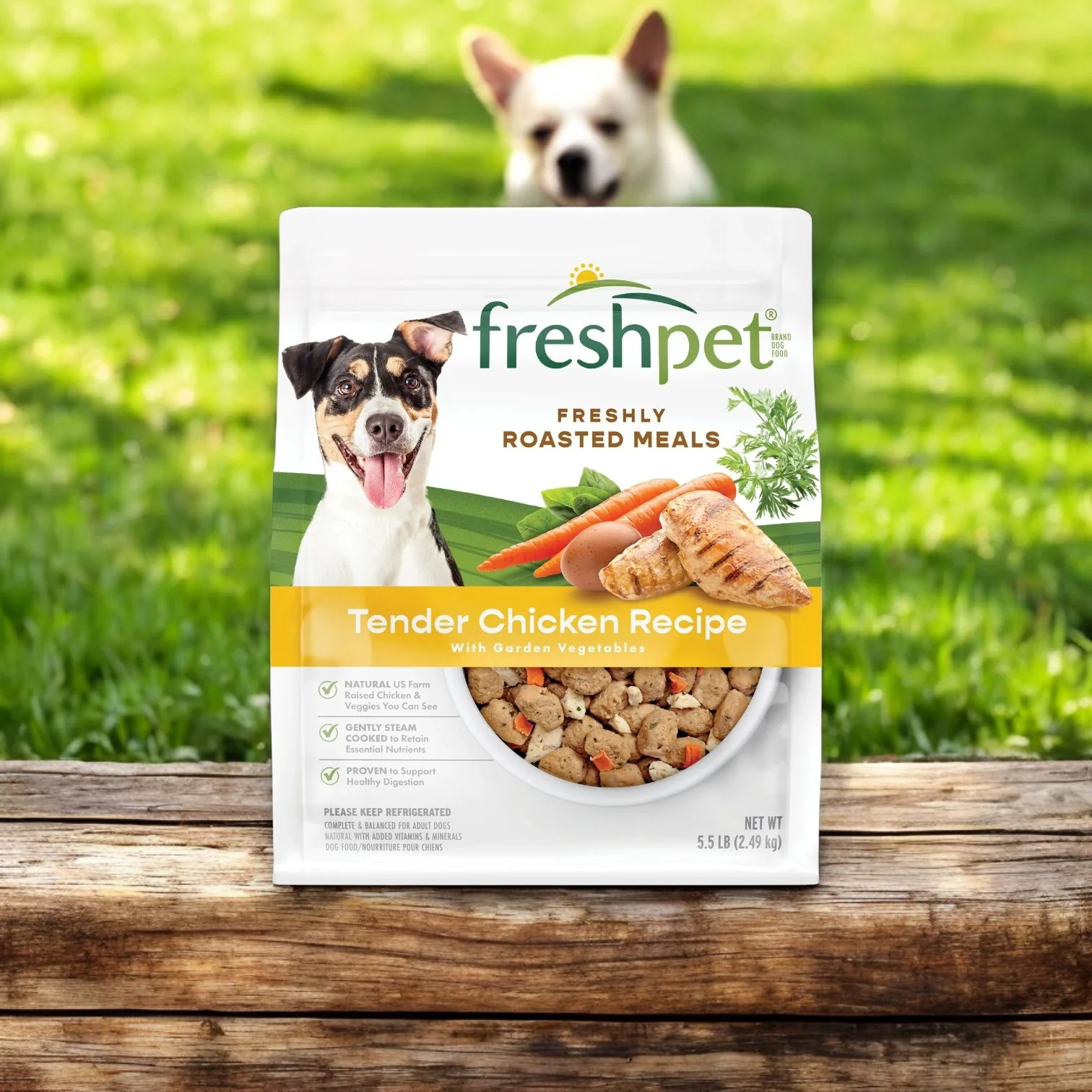
Gently cooked fresh food is cooked at low temperatures, typically between 170 and 200 degrees Fahrenheit, to preserve nutrients while eliminating pathogens. Brands like The Farmer’s Dog, Ollie, and JustFoodForDogs fall into this category. Fresh-frozen food is prepared and then frozen immediately after cooking to lock in freshness. Refrigerated fresh food is not frozen but kept cold and sold through retail stores — Freshpet is the most recognizable example of this format. Air-dried and freeze-dried food is sometimes marketed as fresh, but it is not. These products go through significantly more processing and do not compare nutritionally to gently cooked options.
Understanding the type of fresh food you are buying matters more than most people realize. Each method affects nutrient retention, digestibility, and shelf life differently.
One more thing to watch for on any label: the AAFCO nutritional adequacy statement. This statement confirms that the food meets the nutritional standards set by the Association of American Feed Control Officials for a specific life stage. It does not mean AAFCO tested or approved the product — the organization does not do that — but its presence confirms the brand at least claims to meet a recognized nutritional framework. Any fresh dog food worth considering should carry this statement.
The Real Reasons Dog Owners Are Choosing Fresh Dog Food Brands
The shift toward fresh feeding is not purely trendy. There are practical reasons behind it, and most of them come back to one core idea: dog owners are paying closer attention to what goes into their pets’ bodies.
Traditional dry kibble is a heavily processed product. To achieve a shelf life measured in months, manufacturers use high-heat extrusion processes that can degrade proteins, destroy some vitamins, and require synthetic nutrient add-backs to meet minimum standards. That is not inherently dangerous — millions of healthy dogs eat kibble — but it raises legitimate questions about nutrient bioavailability and ingredient quality.
Fresh food, when formulated correctly, addresses some of those concerns. Gently cooked meals retain more natural moisture, which improves hydration. Real whole-food ingredients are more digestible for most dogs. Many pet owners report improvements in their dog’s stool consistency, coat condition, energy levels, and appetite after making a thoughtful switch.
That said, this is not a category where you should take marketing claims at face value. The best fresh dog food brands back their claims with real data — veterinary nutritionist involvement, feeding trial results, and third-party testing. The ones that do not should be approached with skepticism.
It is also worth being honest about cost. Feeding fresh food exclusively can run anywhere from $700 to $2,200 more per year than premium kibble for the same 30-pound dog. That is a real financial commitment, and it deserves to be part of the conversation, not hidden in fine print.
Best Fresh Dog Food Brands USA 2026 — Top Picks Worth Your Attention
This section covers the brands that consistently earn high marks in 2026 across ingredient quality, manufacturing transparency, nutritional completeness, and real-world performance. These are not paid recommendations. They are research-based profiles built on publicly available data, veterinary sources, and verified brand practices.
The Farmer’s Dog
The Farmer’s Dog operates on a subscription model that delivers customized, pre-portioned meals directly to your home. When you sign up, the brand asks about your dog’s age, weight, breed, activity level, and any known allergies or sensitivities. The meal plan is then tailored to that specific profile.
Every recipe is developed by veterinary nutritionists and made with human-grade ingredients in USDA-approved kitchens inside the United States. The food is packaged in ready-to-serve, biodegradable pouches, and it arrives fresh — not frozen. It is a strong option for dogs with food sensitivities, weight management needs, or allergy histories, because the customization removes a lot of the guesswork that comes with buying off the shelf.
JustFoodForDogs
JustFoodForDogs occupies a unique position among fresh dog food brands because of its commitment to clinical research. It is the only brand in the fresh food category that has conducted systemic feeding trials on all of its daily canine recipes — not just formulated to a nutritional profile, but actually tested on real dogs over time.
The brand’s kitchens are open to the public in several US cities, which is a level of manufacturing transparency that almost no competitor matches. Ingredients are sourced with a farm-to-bowl oversight program, and the brand exceeds AAFCO and FDA regulatory standards. JustFoodForDogs is also available without a subscription, which gives it practical flexibility that subscription-only brands do not offer.
Freshpet
Freshpet is the most accessible brand on this list. You can find it in grocery stores, pet retailers, and big-box stores across the country — no subscription required. It pioneered the refrigerated fresh pet food category and has been doing it longer than most competitors.
In February 2026, Freshpet made a significant milestone in the industry. It became the first and only pet food brand to earn the Clean Label Project Purity Award across its entire US and Canadian product portfolio. The Clean Label Project is a nonprofit organization that independently tests products for more than 100 environmental and industrial contaminants, including heavy metals, pesticides, bisphenols, and phthalates. That full-line certification is a meaningful third-party validation of ingredient safety — and no other pet food brand currently holds it.
In direct comparisons, Freshpet’s chicken recipe also showed the highest crude protein content at 14.5%, along with a comprehensive vitamin blend that includes vitamins A, D3, E, and a full B-complex with biotin and folic acid.
Ollie
Ollie builds customized meal plans similar to The Farmer’s Dog, using a detailed intake quiz that factors in your dog’s weight, activity level, pickiness, and sensitivities. The recipes are gently cooked and use real whole-food ingredients developed with veterinary input.
Ollie performs particularly well for picky eaters and dogs that have struggled to find a fresh food they consistently enjoy. However, when compared head-to-head with brands like Freshpet and The Farmer’s Dog, Ollie’s protein density is lower — 10% crude protein in its chicken recipe — and it lacks some of the vitamin completeness that higher-rated competitors offer.
Nom Nom (Now by Nom Nom)
Nom Nom delivers fresh-frozen meals formulated by veterinary nutritionists that meet AAFCO standards. Portioning is straightforward, and the brand has a loyal following. In comparative testing, however, Nom Nom shows the lowest protein density alongside JustFoodForDogs at 8% crude protein, and it is the only major brand in this category that uses canola oil in its recipes — an ingredient that can cause digestive upset in sensitive dogs. It also currently holds zero Clean Label Project certifications.
That does not make Nom Nom a bad choice, but it does mean it is not the strongest option in a competitive field.
Can Fresh Dog Food Brands Help Prevent Bladder Stones?
This is one of the most important and most under-discussed topics in the fresh dog food conversation, and it deserves a serious, honest answer.
Bladder stones — clinically called uroliths — are clumps of mineralized crystals that form in a dog’s urinary tract. They are painful, potentially dangerous if left untreated, and frustratingly common. The two most frequently diagnosed types are struvite stones and calcium oxalate stones. Each has different dietary considerations, which is why a one-size-fits-all approach to prevention does not work.
What diet does influence, regardless of stone type, is the mineral balance in the body and the concentration of those minerals in the urine. High levels of magnesium, phosphorus, and calcium in the diet contribute to stone formation when urine becomes oversaturated with those minerals. Urinary pH also plays a role — certain stone types form more readily in alkaline urine, while others favor acidic conditions.
Here is where fresh dog food has a legitimate advantage over dry kibble. Fresh food contains significantly more moisture than kibble. A dog eating fresh food naturally produces more diluted urine, which reduces the concentration of stone-forming minerals passing through the urinary tract. This is not a cure for bladder stones, and it is not a substitute for veterinary care — but as a daily dietary habit, it supports the kind of consistent hydration that urinary health depends on.
What to Look for in Fresh Dog Food for Bladder Stone Prevention
When evaluating fresh dog food brands specifically for urinary health, there are several things worth prioritizing. Look for recipes with controlled magnesium and phosphorus levels — both should be present but not in excess. High moisture content is a natural advantage of fresh food formats, so that box is already partially checked. Veterinary nutritionist involvement in the recipe formulation process matters here more than in other contexts, because mineral balance requires precise calculation, not guesswork.
One thing to be careful about: vitamin C supplementation. While vitamin C can have antioxidant benefits, high doses can acidify urine in ways that may increase the risk of calcium oxalate stones in predisposed dogs. Not every brand discloses vitamin C levels clearly, so it is worth asking.
Brands like Spot & Tango specifically design their recipes with urinary health in mind, balancing mineral profiles and pH considerations with veterinary nutritionist oversight. For dogs with a documented history of bladder stones, however, fresh food should be chosen in direct consultation with a veterinarian. Active stone conditions may require prescription urinary diets that go beyond what any over-the-counter fresh food brand can provide.
What Strong Manufacturing Practices Look Like in Fresh Dog Food Brands USA
A brand’s ingredient list tells you what is in the food. Its manufacturing practices tell you whether those ingredients were handled in a way that actually keeps your dog safe. These two things are not the same, and both matter.
The most regulated quality standard in the US pet food industry is the human-grade designation. This term is legally defined and heavily scrutinized. To use it legitimately, a brand must meet three conditions: every ingredient must be fit for human consumption, the entire production process — including storage, handling, and transportation — must comply with FDA and USDA standards for human food, and the food must be made in a licensed human food facility that passes regular audits. Most brands do not actually qualify for this designation, even if their marketing language implies otherwise.
The FDA requires all commercial pet food to be safe, produced under sanitary conditions, free from harmful substances, and truthfully labeled. However, the FDA does not require pre-market approval for pet food products, and enforcement happens unevenly at the state level through AAFCO-adopted regulations. That regulatory gap is why manufacturing transparency matters so much. With less oversight built into the system compared to human food, brands that voluntarily exceed minimum standards — through third-party audits, open kitchens, and feeding trial data — deserve genuine recognition.
Questions to Ask Any Fresh Dog Food Brand Before You Buy
Asking the right questions before committing to a brand will save you both money and frustration. Is the food manufactured in a USDA-approved or human food-grade facility? Does the brand publish third-party audit results or feeding trial data? Are board-certified veterinary nutritionists involved in recipe development, or only listed for marketing credibility? Does the product carry an AAFCO nutritional adequacy statement? Is the human-grade claim legally backed, or is it a loose interpretation of the term?
Brands that answer these questions openly are the ones building the category the right way. Brands that redirect, obscure, or simply do not respond deserve more scrutiny before you purchase.
Matching Your Dog’s Needs to the Right Fresh Dog Food Brand
Even among the top-rated options, no single brand is the right fit for every dog. Choosing well means taking your dog’s individual profile seriously — not just picking whichever brand has the most compelling advertising.
Life stage matters. Puppies, adults, and senior dogs have different caloric and nutritional requirements. A meal plan calibrated for a healthy adult may not meet the higher protein and fat demands of a growing puppy, or the lower-calorie needs of an aging dog managing joint issues. Confirm that the brand you choose offers life-stage-appropriate formulas and that they are AAFCO-compliant for your dog’s specific stage.
Health conditions change the equation. Dogs with kidney disease, liver conditions, severe allergies, or active bladder stone diagnoses need veterinary-guided nutrition. For these dogs, choosing a fresh dog food brand without professional input is not advisable — no matter how high the brand’s reputation. A veterinary nutritionist can help you identify whether a specific formula is appropriate or whether a prescription diet is necessary.
Budget is a real constraint. Fresh dog food is expensive. If full fresh feeding is not financially sustainable, partial fresh feeding — mixing a portion of fresh food with premium kibble — is a supported middle-ground option that many veterinarians acknowledge as a practical compromise. Some benefit is better than none.
Transition carefully. Switching food too quickly is a common mistake. Most veterinarians recommend a 7 to 10 day transition period, gradually increasing the proportion of new food while decreasing the old. Rushing this process leads to GI upset, loose stools, and sometimes an unfair rejection of a food the dog would have otherwise tolerated fine.
Clearing Up Common Misconceptions About Fresh Dog Food Brands
The fresh pet food category has grown fast enough that myths have accumulated alongside the real information. A few of the most common ones deserve direct correction.
Fresh is not automatically better than all kibble. Conventional premium kibble lines — Purina Pro Plan, Hill’s Science Diet, Royal Canin — still lead the industry in peer-reviewed feeding trial data and condition-specific therapeutic formulations. For dogs managing chronic health conditions through prescription diets, fresh food is rarely a like-for-like substitute. Fresh dog food brands excel in general wellness nutrition, not necessarily in clinical therapeutic applications.
Most brands cannot legally claim to be human-grade. The term has a specific legal meaning. Using it in marketing without meeting the full production standard is misleading, and a surprising number of brands do exactly that. If a brand makes this claim, ask for documentation.
Fresh food still needs AAFCO compliance. Some buyers assume that because fresh food is “natural,” it exists outside the regulatory framework. It does not. Any complete and balanced claim still requires AAFCO nutritional backing. A food made with beautiful ingredients that is nutritionally incomplete is still a poor choice for daily feeding.
Full fresh feeding is not the only option. The assumption that it is all-or-nothing keeps many pet owners from making any change at all. Partial fresh feeding, using fresh food as a topper, or rotating fresh food into a mixed feeding schedule are all legitimate approaches that can deliver meaningful benefits without requiring a full dietary overhaul.
Final Thoughts on Choosing the Best Fresh Dog Food Brands
The growth of fresh dog food brands reflects something real and positive: pet owners are more informed, more invested, and more willing to think critically about what they feed their dogs. That is a good thing.
But a growing market also attracts brands that prioritize marketing over substance. The safest approach to navigating this category is to rely on verified information — third-party testing, AAFCO statements, feeding trial data, veterinary nutritionist credentials — rather than packaging design and influencer partnerships.
The best fresh dog food brand for your dog is not necessarily the most popular one or the one with the most Instagram-worthy branding. It is the one that matches your dog’s life stage, health profile, and nutritional needs, manufactured by a company that handles food the way you would want your own food handled.
Use the questions from this guide as your checklist. Talk to your veterinarian before making major dietary changes, especially if your dog has an existing health condition. And give any transition the time it needs to show real results — usually a few weeks of consistent feeding before drawing conclusions.
Fresh food done right is genuinely worth the investment. The key word is right.
Frequently Asked Questions About Fresh Dog Food Brands
1. What are the best fresh dog food brands available in the USA in 2026?
The most consistently well-rated fresh dog food brands in 2026 include The Farmer’s Dog, JustFoodForDogs, Freshpet, Ollie, and Nom Nom. Each brand has distinct strengths in ingredient quality, manufacturing transparency, and nutritional completeness, so the best choice depends on your dog’s individual profile and your household budget.
2. Is fresh dog food actually better than premium kibble?
Fresh dog food offers advantages in moisture content, ingredient digestibility, and minimal processing, but it is not automatically superior to all kibble. Premium therapeutic kibble from brands like Hill’s Science Diet or Purina Pro Plan still leads in clinical research depth and condition-specific formulation. Fresh food excels in general wellness nutrition for healthy dogs.
3. How many times a day should I feed my dog fresh food?
Most adult dogs do well on two meals per day, morning and evening, regardless of food type. Fresh dog food brands typically provide portioned daily amounts based on your dog’s weight and activity level. Follow the brand’s feeding guide as your starting point, then adjust based on your dog’s body condition over two to four weeks.
4. Can fresh dog food help prevent bladder stones in dogs?
Fresh food’s naturally high moisture content helps dilute urine, which can reduce the concentration of stone-forming minerals passing through the urinary tract. This makes it a supportive dietary choice for bladder stone prevention. However, it is not a treatment for active bladder stones — dogs with existing urinary conditions need veterinary-guided nutritional management.
5. What does “human-grade” mean on fresh dog food packaging?
Human-grade is a legally defined term that means every ingredient and the entire production process must meet FDA and USDA standards for human food. The food must also be manufactured in a licensed human food facility that undergoes regular audits. Many brands use this term loosely without meeting the full legal standard, so always ask for documentation if it is a deciding factor for you.
6. How long does fresh dog food stay good in the refrigerator?
Most fresh dog food brands recommend consuming refrigerated portions within four to five days of opening. Frozen portions should be thawed in the refrigerator and used within three to five days of thawing. Always follow the specific storage instructions provided by the brand, as formulations vary in their shelf stability.
7. Are fresh dog food brands worth the extra cost?
Whether fresh food is worth the added expense depends on your dog’s health needs and your household priorities. Feeding fresh exclusively can cost significantly more per year than premium kibble for the same dog. For pet owners working with a tighter budget, partial fresh feeding — using fresh food as a topper or mixing it with premium kibble — is a practical middle ground that many veterinarians support.
8. Do fresh dog food brands need to be AAFCO compliant?
Yes. Any dog food marketed as complete and balanced must meet AAFCO nutritional standards, regardless of whether it is fresh, frozen, or kibble. AAFCO compliance confirms that the food provides the minimum nutrients your dog needs for their specific life stage. Always look for the AAFCO nutritional adequacy statement on the label before purchasing.
9. Can puppies eat fresh dog food?
Yes, but only if the specific formula is AAFCO-approved for growth or all life stages. Puppies have higher caloric, protein, and mineral requirements than adult dogs, and a formula designed for adults may not meet those needs adequately. Always confirm that the fresh dog food brand you choose offers a puppy-appropriate formula with clear AAFCO life stage labeling.
10. How do I transition my dog to fresh food without causing stomach upset?
A gradual transition over seven to ten days is the standard recommendation. Start by replacing about 25% of your dog’s current food with the new fresh food, then increase the proportion every two to three days until the transition is complete. Rushing this process is the most common cause of digestive upset during a diet switch, and it can make a dog reluctant to accept an otherwise good food.